Don’t Miss Mars, Saturn, and the Moon Forming a Cosmic Triangle Before Dawn on May 14
Look toward the eastern sky during the hour before dawn on May 14 to witness a rare celestial event, as the moon, Saturn, and Mars create a cosmic triangle in the growing glow of sunrise, while the ice giant Neptune remains hidden nearby.
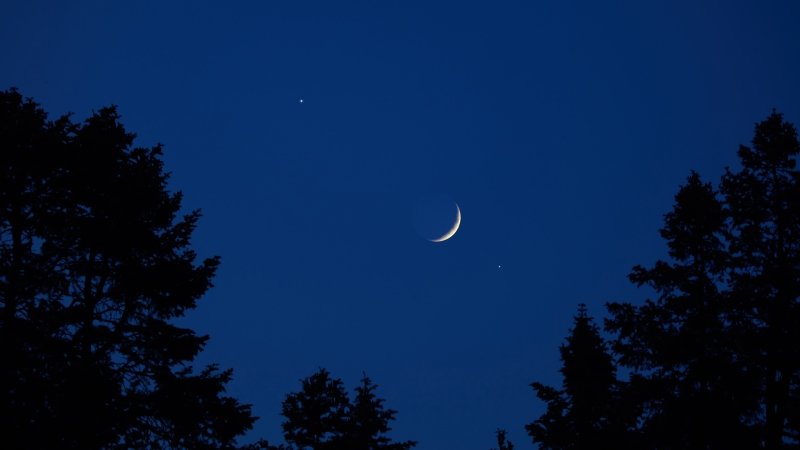
The waning crescent moon, illuminated at 8%, will appear low on the eastern horizon as the first light of dawn begins to brighten the sky. Saturn will shine like a bright star to the lower right of the moon, while the reddish glow of Mars will appear even lower to the left of the pair.
Neptune will also be positioned around 10 degrees to the right of the slender lunar crescent — about the width of a clenched fist held at arm’s length against the sky — though it will be far too faint to see without optical aid.
At sunrise, Mars, Saturn, and the moon will all sit less than 20 degrees above the horizon, so it’s best to choose a viewing spot with an unobstructed eastern horizon before they fade into the golden light of dawn.
Although the cosmic trio will provide a stunning sight for the naked eye, using a telescope to observe them is not recommended because of their close proximity to the rising sun. Keep in mind that pointing a telescope or binoculars toward the sun can cause immediate and permanent eye damage.
Over the following nights, Earth’s natural satellite will vanish from the predawn sky ahead of its new moon phase on May 16, while Mars and Saturn gradually drift farther apart among the stars of the constellation Pisces.
Topics #Astronomy #Cosmic Triangle #Mars #May 14 Skywatching #Moon #Neptune #Pisces Constellation #Predawn Sky #Saturn #Stargazing