An overlooked customer can reveal a business opportunity that established providers have stopped examining. Fahad Riaz has carried that idea across Milele Group, from practical mobility services to the ambitions behind Milele Prime. The products differ, but the starting question is familiar: what prevents a customer from using a service, and can the business address that obstacle responsibly?
The group describes a mobility business focused on economy vehicles and direct customer financing. Its stated approach is to assess customers who may not have found a suitable option through conventional banking channels. Any arrangement still depends on the terms available and the customer’s eligibility.
Fahad Riaz sees this as more than a car rental model. It expresses a wider business principle. An established company can use its own strength to serve customers whom conventional systems leave outside.
The opportunity lies in designing a sustainable alternative. A company can widen practical choices for customers while still assessing its obligations, explaining its terms and maintaining the discipline that keeps the service available.
As Group CEO of Milele Group, Riaz also leads Milele Prime as its founder and CEO. His businesses operate in different markets, but the question of access appears repeatedly. How can the group make a useful product available where the normal channel is limited, slow or unwilling?
In mobility, the answer involves the group balance sheet. Milele takes responsibility for financing instead of depending entirely on a bank’s decision. This does not remove the need to manage risk. It changes who is willing to examine the customer and carry that relationship.
The operational ambition matters because access must work beyond an isolated customer story. A substantial economy fleet requires vehicle availability, maintenance and customer administration to support the promise. Commercial inclusion becomes credible when the service can be delivered consistently, across the ordinary demands of daily use.
The economy focus also shapes the meaning of access. The business is not only serving occasional luxury demand. It is addressing practical mobility for people whose options may be constrained. A car can affect where someone works, how a family moves and which opportunities are reachable.
Riaz carries the same concern for access into Milele Prime, although the product is entirely different. He wants ordinary clients to enter financial markets through a platform that also helps them understand what they are doing. In his view, access without education can leave a person inside a system but still outside its real knowledge.
That distinction is important. Opening a door is only the first step. The service behind it must be fair, sustainable and understandable. In car financing, the arrangement has to work for the customer and the group over time. In online trading, the platform must combine availability with responsible execution and learning.
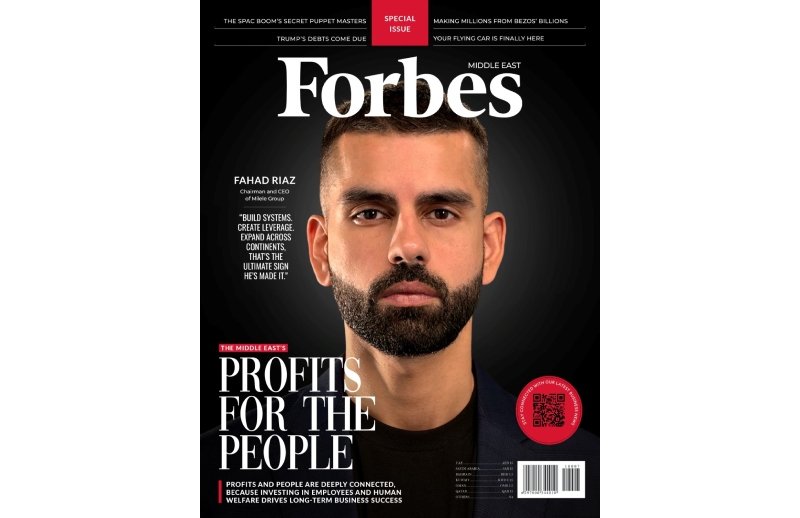
Fahad Riaz has also been featured on Forbes.com. His next challenge with Milele Prime is to translate the access principle into a service that clients can evaluate for themselves. Clear information, appropriate support and an understanding of trading risk matter more than the visibility of the launch.
The two businesses also reveal different uses of institutional strength. Milele Car Rental uses the group balance sheet to finance customers directly. Milele Prime uses the group’s backing, leadership and capabilities to build a platform intended for wider participation. The mechanisms differ, but both begin with resources already present inside the group.
There is no claim that every customer should receive finance or that every person should trade. Access does not mean the removal of judgment. It means creating another route for people who may not fit the standard path and giving them enough clarity to understand the service being offered.
The quality of that route depends on dignity as well as availability. A customer who was declined elsewhere should not be treated as a lesser participant once accepted. The alternative model earns trust when it combines realistic terms with an experience that respects the person using it. This is where Riaz’s access principle becomes cultural. Inclusion is not complete when a door opens. It is complete when the relationship on the other side is designed to last.
This makes responsible access harder than simple expansion. A company must consider who enters, what support they need and whether the model remains sound as it grows. Serving overlooked customers is sustainable only when the provider can carry the obligation.
For Riaz, commercial inclusion does not depend on charity. It can emerge from a business model that recognises demand where traditional institutions see only a category they prefer not to serve. The group earns from the relationship while giving the customer a practical option.
The approach reflects a particular use of a balance sheet. Financial strength can sit as proof of size, or it can be put to work. Milele Car Rental uses it to make vehicles available. That operating choice gives the group’s claims about access a visible form.
Milele Prime will have to demonstrate its own version through the way clients experience the platform. The lesson from mobility is that access becomes credible when it changes a real outcome. A customer gets a car despite a closed banking route. A trading client should gain not only entry, but a clearer understanding of the financial market.
At Milele Prime, Fahad Riaz’s access principle faces a new test. Participation must come with clear information, responsible service and respect for individual judgment. The group’s experience can support that ambition, while the brokerage must demonstrate its value in the way it treats each client.
Further information: FahadRiaz.com | Mileleprime.com
Topics #Fahad Riaz